Showing posts with label prayer. Show all posts

Friday, September 9, 2022

Our Daily Descent


 “What is man?”, the palmist asks. In this life I doubt we come to the full answer. John Calvin pointed in the right direction when he wrote that in order to get an idea of 'us' we need to start with God. For the truth of the matter is - "it is he that hath made us, and not we ourselves"  [Psalm 100].

"Our wisdom, in so far as it ought to be deemed true and solid Wisdom, consists almost entirely of two parts: the knowledge of God and of ourselves. But as these are connected together by many ties, it is not easy to determine which of the two precedes and gives birth to the other. For, in the first place, no man can survey himself without forthwith turning his thoughts towards the God in whom he lives and moves; because it is perfectly obvious, that the endowments which we possess cannot possibly be from ourselves; nay, that our very being is nothing else than subsistence in God alone."Institutes of the Christian Religion by John Calvin, Book 1.1
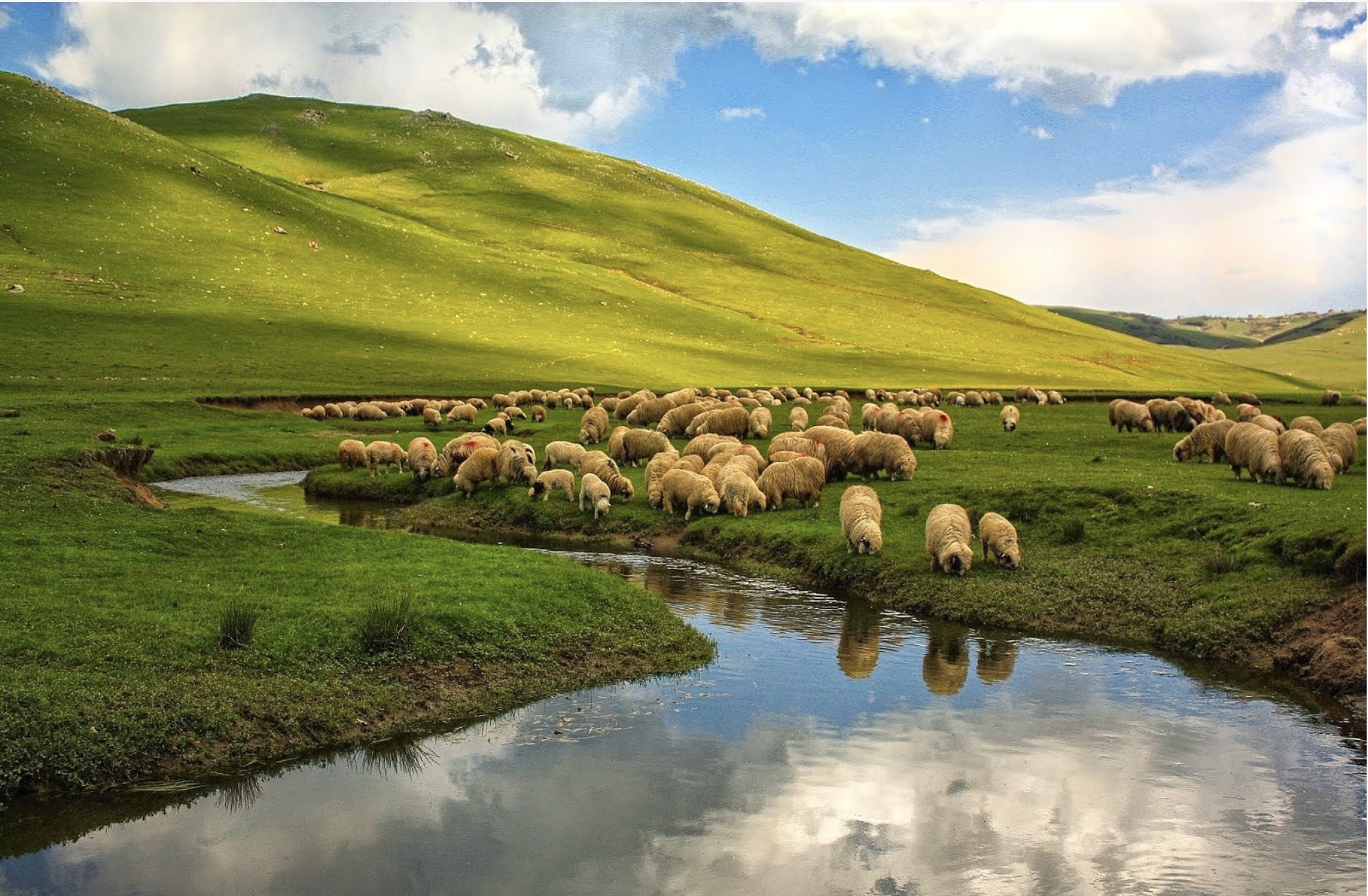
If self-knowledge begins with God, then apart from God any view of ourselves is distorted. The high regard we hold ourselves in since the Fall not only muddies a right understanding but is at the core of what ails us as sinners.  

I recently reread C.S. Lewis' That Hideous Strength. I picked it up again because the theme revolving around the N.I.C.E. reminded me of the still ongoing CDC involvement in the Covid 19 pandemic mandates. But I digress. What is relevant to this post is a small excerpt:

“There,” he said, “a very simple adjustment. Humans want crumbs removed; mice are anxious to remove them…”

“How huge we must seem to them,” said Jane.

This inconsequent remark had a very curious cause. Hugeness was what she was thinking of and for one moment it had seemed she was thinking of her own hugeness in comparison with the mice. But almost at once this identification collapsed. She was really thinking simply of hugeness. Or rather, she was not thinking of it. She was, in some strange fashion, experiencing it. Something intolerably big, something from Brobdingnag was pressing on her, was approaching, was almost in the room. She felt herself shrinking, suffocated, emptied of all power and virtue. She darted a glance at the Director which was really a cry for help, and that glance, in some inexplicable way, revealed him as being, like herself, a very small object. The whole room was a tiny place, a mouse’s hole, and it seemed to her to be tilted aslant — as though the insupportable mass and splendour of this formless hugeness, in approaching, had knocked it askew. She heard the Director’s voice.

“Quick,” he said gently,“you must leave me now. This is no place for us small ones, but I am inured. Go! - That Hideous Strength by C.S. Lewis. Chapter 8 The Pendragon

The presence of God was pressing upon Jane which necessitated a shrinking or humbling experience, a reorientation. Her inflated sense of self rapidly shrank to that of a mouse. She was uncomfortably thrown off balance as the Divine hugeness descended into that room. Jane, a sinner, was experiencing the beginning of self-knowledge which only comes when one encounters God. She was descending. John Calvin wrote:

… the inference to be drawn is that men are never duly touched and impressed with a conviction of their insignificance, until they have contrasted themselves with the majesty of God. (Calvin, Book 1.1)

To come into the presence of our Creator shatters any illusion of creaturely independence and self-sufficiency. We are not our own and are undone before him. Apart from him we have no existence (Col 1:16-17). It is God who created us, as Genesis 1 teaches, and not we ourselves. The Christian life is one of being brought low to a restored (saved) position with God who is the only point of reference for all of creation.

The psalmist asks the question,  

what is man that you are mindful of him,
and the son of man that you care for him?

Yet you have made him a little lower than the heavenly beings
and crowned him with glory and honor (Psalm 8:4-5) ESV

 "Lower than..." Our problem is not that we think too lowly of ourselves but too highly. We lift ourselves up. Yet God would have us brought lower (Luke 9:48b). Ever since Adam sinned man’s default orientation is to magnify himself. Most naturally we minimize our flaws and sins as we exalt ourselves in relation to others. Like crazed men we flee our created state of absolute dependence on God thinking our good lies in the opposite direction. 

This brings me to Thomas Cranmer’s 1662 BCP Office of Morning Prayer. In this daily liturgy the Christian is given a path of reorientation or, more to the point, sanctification through the confession of sin and trust in the gospel. 

At the beginning of MP there are several opening Scripture verses that essentially diagnose our condition and plight as sinners. We need forgiveness and we need righteousness. The standard of the Law is put before us:

When a wicked person turns away from the wickedness he has committed and does what is just and right, he shall save his life. (Ezekiel 18:27) ESV 

How does a sinner do this? He can’t. Morning Prayer then moves to an admonition, an appeal to all present to come down off our thrones. We are exhorted 

that we should not dissemble nor cloak [our sins and sinfulness] before the face of Almighty God our heavenly Father; but confess them with an humble, lowly, penitent, and obedient heart; to the end that we may obtain forgiveness of the same, by his infinite goodness and mercy. 

Our descent continues.

By nature we dissemble as to our true condition. Just think how difficult it is to honestly confess our sin to one we have offended. We don't want to go that low. We cloak and minimize our sin. In a word we need to approach the throne of grace with a sense of our dependency upon God: 

Turn thou us unto thee, O LORD, and we shall be turned; renew our days as of old (Lam 5:21).  

Make haste to help me, O Lord, my salvation! (Psalm 38:22)

Or as Augustine wrote, "God command what you will and grant what you command." 

The General Confession of Sin follows:

ALMIGHTY and most merciful Father; We have erred, and strayed from thy ways like lost sheep. We have followed too much the devices and desires of our own hearts. We have offended against thy holy laws. We have left undone those things which we ought to have done; And we have done those things which we ought not to have done; And there is no health in us. But thou, O Lord, have mercy upon us, miserable offenders. Spare thou them, O God, which confess their faults. Restore thou them that are penitent; According to thy promises declared unto mankind in Christ Jesus our Lord. And grant, O most merciful Father, for his sake; That we may hereafter live a godly, righteous, and sober life, To the glory of thy holy Name. Amen.

The confession of sin culminates in the acknowledgment of our condition. Due to our rebellion from God our Creator there is no health in us… we are miserable offenders. Brought lower still to our fallen, creaturely, and God-dependent state, the remedy of the gospel as declared in Christ Jesus is set forth! The minister then declares that through faith in Christ sins are forgiven: God pardoneth and absolveth all them that truly repent, and unfeignedly believe his holy Gospel! The power to forgive sins is in the gospel.

I find it both amazing and uplifting that we then find only two psalms actually printed out in the 1662 BCP Morning Prayer office: Psalm 95 and 100. And they both echo the same truth.

Psalm 95 
6. O come, let us worship and fall down : and kneel before the LORD our Maker.
7. For he is the Lord our God : and we are the people of his pasture, and the sheep of his hand. 

Psalm 100 
2. Be ye sure that the Lord he is God : it is he that hath made us, and not we ourselves; we are his people, and the sheep of his pasture.  

As his creatures, his sheep, his people our blessing is found with and in Christ Jesus alone who "
being found in human form, humbled himself by becoming obedient to the point of death, even death on a cross" (Phil 2:8). 

For he has made us and not we ourselves.

Psalm 100

Jubilate Deo
O BE joyful in the Lord, all ye lands : serve the Lord with gladness, and come before his presence with a song.
Be ye sure that the Lord he is God : it is he that hath made us, and not we ourselves; we are his people, and the sheep of his pasture.
O go your way into his gates with thanksgiving, and into his courts with praise : be thankful unto him, and speak good of his Name.
or the Lord is gracious, his mercy is everlasting : and his truth endureth from generation to generation.

Update Oct.5, 2022:

John Calvin on the meaning to be taken from Psalm 100, "it is he that hath made us, and not we ourselves; we are his people, and the sheep of his pasture."

Hence the Psalmist, after saying that the Lord "has made us," to deprive us of all share in the work, immediately adds, "not we ourselves." That he is speaking of regeneration, which is the commencement of the spiritual life, is obvious from the context, in which the next words are, "we are his people, and the sheep of his pasture," (Psalm 100:3.) Not contented with simply giving God the praise of our salvation, he distinctly excludes us from all share in it, just as if he had said that not one particle remains to man as a ground of boasting. The whole is of God. Institutes: Christian Religion, Book 2.3.6

Friday, February 6, 2015

"When I saw him, I fell at his feet as though dead..."

OK, to grasp the condition of our fallen estate in this life is just way beyond us. This is especially true if we attempt the impossible task of comprehending the incomprehensible holiness of God. How immense is that chasm between our "righteousness" and God's! How far short of the glory of God have we fallen, even due to one sin? Think of Adam... With this in mind I wonder what would be our reaction if we ever came face to face with our glorified Lord in this life?
I, John, your brother and partner in the tribulation and the kingdom and the patient endurance that are in Jesus, was on the island called Patmos on account of the word of God and the testimony of Jesus. I was in the Spirit on the Lord's day, and I heard behind me a loud voice like a trumpet saying, “Write what you see in a book and send it to the seven churches, to Ephesus and to Smyrna and to Pergamum and to Thyatira and to Sardis and to Philadelphia and to Laodicea.”
Then I turned to see the voice that was speaking to me, and on turning I saw seven golden lampstands, and in the midst of the lampstands one like a son of man, clothed with a long robe and with a golden sash around his chest. The hairs of his head were white, like white wool, like snow. His eyes were like a flame of fire, his feet were like burnished bronze, refined in a furnace, and his voice was like the roar of many waters. In his right hand he held seven stars, from his mouth came a sharp two-edged sword, and his face was like the sun shining in full strength.
When I saw him, I fell at his feet as though dead. But he laid his right hand on me, saying, “Fear not, I am the first and the last, and the living one. I died, and behold I am alive forevermore, and I have the keys of Death and Hades. [ESV]
 (Rev 1: 9-18)
These words are of the Apostle John - the disciple whom Jesus loved - near the end of his life after eighty-plus years of faithfully following the Lord. Years of the Holy Spirit's refining work in his life. He probably had as good a handle as anyone on the reality of the sinful nature and also the forgiveness of sins that was his in Christ. And yet when face to face with the glorified Lord, his instinctive reaction, the only thing he could to do, was to fall at Jesus's feet as though dead! He, a saved sinner, had come face to face with Righteousness. 

I'm sure it's no coincidence that John in his first letter exhorts believers to regular acknowledgment and confession of sin. Certainly that and more is needed to disabuse us of the tempting delusion that we in our own persons and works are becoming more acceptable to God.  Do we think we are acquiring a measure of inward holiness that commends us to God? Indeed, as those effectually called and regenerated [we] are further sanctified, really and personally, through the virtue of Christ's death and resurrection, by his Word and Spirit dwelling in [us] (WCF 13.1). And yet the only holiness and righteousness that commends us to God is that of our Lord Jesus Christ.
We cannot by our best works merit pardon of sin, or eternal life at the hand of God, by reason of the great disproportion that is between them and the glory to come; and the infinite distance that is between us and God, whom, by them, we can neither profit, nor satisfy for the debt of our former sins, but when we have done all we can, we have done but our duty, and are unprofitable servants: and because, as they are good, they proceed from his Spirit; and as they are wrought by us, they are defiled, and mixed with so much weakness and imperfection, that they cannot endure the severity of God's judgment.
Notwithstanding, the persons of believers being accepted through Christ, their good works also are accepted in him; not as though they were in this life wholly unblamable and unreprovable in God's sight; but that he, looking upon them in his Son, is pleased to accept and reward that which is sincere, although accompanied with many weaknesses and imperfections. (WCF 16.5-6)
When coming to God even our best works are stained with sin. If our best was all there was for us to bring then we would be as dead men. But we come to God calling on the Lord Jesus our Mediator and Advocate who continually intercedes for us with his blood and righteousness - washing away our sins, cleansing our stained consciences, and clothing us with his moral perfection.  He reaches out his right hand putting it on us and says, "Fear not, I am the first and the last, and the living one. I died, and behold I am alive forevermore..."  

Wednesday, January 14, 2015

Prayer: Calvin's Law/Gospel Distinction...

In the following excerpt from the Institutes of Religion it's noteworthy to see how central the Law/ Gospel distinction is to John Calvin's understanding of prayer. It may not be readily obvious to some and that is probably due to the notion held by many that Calvin didn't hold to what is often wrongly described as a "Lutheran" and not Reformed doctrine. In addition, Calvin does not always label his applicable comments as Law/Gospel. And one of the most likely reasons is the fact that it was so accepted and understood among Reformers as an uncontroversial though essential understanding of sinful man's redemption as presented in Scripture. Law/Gospel as God's two Words in Scripture was embraced by the Reformers from Luther and Tyndale through Calvin and Beza and so continued among  Reformed theologians throughout the 17th and 18th centuries.
... notwithstanding of our being thus abased and truly humbled, we should be animated to pray with the sure hope of succeeding. There is, indeed, an appearance of contradiction between the two things, between a sense of the just vengeance of God and firm confidence in his favor, and yet they are perfectly accordant, if it is the mere goodness of God that raises up those who are overwhelmed by their own sins. For, as we have formerly shown (chap. 3: sec. 17. 2) that repentance and faith go hand in hand, being united by an indissoluble tie, the one causing terror, the other joy, so in prayer they must both be present. This concurrence David expresses in a few words: "But as for me, I will come into thy house in the multitude of thy mercy, and in thy fear will I worship toward thy holy temple," (Psalm 5:7.) Under the goodness of God he comprehends faith, at the same time not excluding fear; for not only does his majesty compel our reverence, but our own unworthiness also divests us of all pride and confidence, and keeps us in fear. [emphasis added] John Calvin, Institutes of Religion Book 3.20.11
Looking at chapter 17.2 in Book 3 to which Calvin refers the reader we find:
For this reason, the promises offered in the law would all be null and ineffectual, did not God in his goodness send the gospel to our aid, since the condition on which they depend, and under which only they are to be performed--viz. the fulfillment of the law, will never be accomplished [i.e. by us]. Still, however the aid which the Lord gives consists not in leaving part of justification to be obtained by works, and in supplying part out of his indulgence, but in giving us Christ as in himself alone the fulfillment of righteousness. For the Apostle, after premising that he and the other Jews, aware that "a man is not justified by the works of the law," had "believed in Jesus Christ," adds as the reason, not that they might be assisted to make up the sum of righteousness by faith in Christ, but that they "might be justified by the faith of Christ, and not by the works of the law," (Gal. 2:16). If believers withdraw from the law to faith, that in the latter they may find the justification which they see is not in the former, they certainly disclaim justification by the law. Therefore, whose will, let him amplify the rewards which are said to await the observer of the law, provided he at the same time understand, that owing to our depravity, we derive no benefit from them until we have obtained another righteousness by faith. Thus David after making mention of the reward which the Lord has prepared for his servants (Ps. 25 almost throughout), immediately descends to an acknowledgment of sins, by which the reward is made void. In Psalm 19, also, he loudly extols the benefits of the law; but immediately exclaims, "Who can understand his errors? cleanse thou me from secret faults," (Ps. 19:12). This passage perfectly accords with the former, when, after saying, "the paths of the Lord are mercy and truth unto such as keep his covenant and his testimonies," he adds, "For thy name's sake, O Lord, pardon mine iniquity: for it is great," (Ps. 25:10, 11). Thus, too, we ought to acknowledge that the favor of God is offered to us in the law, provided by our works we can deserve it; but that it never actually reaches us through any such desert. [emphasis and bracketed comment added]
Indeed. The favor of God offered in the Law is secured for sinners only by Christ's perfect obedience for them. And so it is that the grace of God in Christ as offered in the Gospel and received through faith alone is that which brings sinners into the favor of God offered in the Law (Romans 10:5-11). Believers are saved by works yet not those of their own... but by the righteousness of Jesus Christ, the perfect and acceptable works of his obedience and his sacrificial death on the cross for them.

Back to prayer. Calvin is making the point that we are miserable sinners and yet beloved of God. And as we come to the heavenly throne of grace in prayer we should not ignore nor dissemble concerning our sinfulness, our lack of faith, and coldness of heart. We feel the weight of those stains on our words even as we direct them heavenward. Calvin is expressing a wonderful thing here. There is no dissonance in the fact that my sins are all too present as I approach the Holy of Holies. In his presence, God's holy Law does what it is meant to do - it shines light on sin. So it is in our want of personal righteousness that God meets us with his mercy and favor in Christ as we pray. As the Spirit of God highlights our infirmities at one moment, at the next he directs our hearts to his mercy touching us with the provision of Christ's healing perfection. It's in this way that we approach our heavenly Father with the assurance of full acceptance, not hiding or minimizing our sins but owning them and taking refuge beneath the blood of our Mediator and Advocate, Jesus Christ.

Wednesday, January 7, 2015

Prayer - "Founded On Free Mercy"

In fine, supplication for pardon, with humble and ingenuous confession of guilt, forms both the preparation and commencement of right prayer. For the holiest of men cannot hope to obtain any thing from God until he has been freely reconciled to him. God cannot be propitious to any but those whom he pardons. Hence it is not strange that this is the key by which believers open the door of prayer, as we learn from several passages in The Psalms. David, when presenting a request on a different subject, says, "Remember not the sins of my youth, nor my transgressions; according to thy mercy remember me, for thy goodness sake, O Lord," (Psalm 25:7.) Again, "Look upon my affliction and my pain, and forgive my sins," (Psalm 25:18.) Here also we see that it is not sufficient to call ourselves to account for the sins of each passing day; we must also call to mind those which might seem to have been long before buried in oblivion.
... prayers will never reach God unless they are founded on free mercy. To this we may refer the words of John, "If we confess our sins, he is faithful and just to forgive us our sins and to cleanse us from all unrighteousness," (1 John 1:9.) Hence, under the law it was necessary to consecrate prayers by the expiation of blood, both that they might be accepted, and that the people might be warned that they were unworthy of the high privilege until, being purged from their defilements, they founded their confidence in prayer entirely on the mercy of God.
John Calvin, Institutes of Religion: Book 3.20.9 

Interestingly, it is not union with Christ, either elective or spiritual, that Calvin highlights as the ground upon which our prayers are received by God. The reason, it seems, is that union with Christ as a doctrine fails to address the central need of the saved-yet-still-sinner as he comes to God in prayer. That need is for assurance and confidence in order to approach the living God. "... how much more shall the blood of Christ, who through the eternal Spirit offered himself without blemish unto God, cleanse your conscience from dead works to serve the living God?" (Hebrews 9:14) Our prayers are heard of God because of the pardon of sins found only in the meritorious blood of Christ which apprehended by faith gives believers a firm ground of confidence upon which to pray. "Let us therefore draw near with boldness unto the throne of grace, that we may receive mercy, and may find grace to help us in time of need." (Hebrews 4:16)

Monday, January 5, 2015

Taking Stock... Prayer

Taking stock of one's self is rarely a pleasant experience, at least if done with a modicum of honesty which is probably why I seldom do it. But recently I asked myself - "Self, what things are lacking in your life?" Fear not, the list is too long so I'm not about to unload a morose account of failings that would be both embarrassing to me and boring to you. Yet one thing quickly came to mind that I want to mention and that is a desire to have a more consistent and heart-felt prayer life.

Now when heading down the prayer-life path there are certain forks-in-the-road best not taken. What I don't have in mind when speaking of a prayer-life is that meditative approach to God which seeks to attain to or find a deep mystical experience. No, I've already taken that Higher Life-Madame Guyon-Brother Lawrence trek years ago. It's one that leads only to a dead end of self-effort and self-absorption. Nor am I necessarily thinking of prayer simply in terms of bringing to God petitions and names of those with needs, i.e. the prayer list variety of prayer. I'm not saying that isn't important as it does have its place. And last, I want to avoid any "if only... then..." approach to prayer. In other words, it's crucial to not fall into the kind of thinking that says "if only I had a better prayer life then such and such blessings or spiritual growth or [fill-in the blank] would result." That's taking the commands and gifts of God and turning them into a works-formula in order earn something that can't be earned. We are creatures solely dependent on the goodness and favor of God, not equal players with him as if he responds and blesses according to our bargaining and implicit deal-making.

Where I'm coming from, I guess, is a kind of conviction or being convicted of a lackadaisical attitude regarding something that I know ought to be otherwise. We are commanded and entreated in Scripture to pray. And as is always the case, that which we are commanded by God to do is also that which embodies our good. So it is in a desire for a heart/attitude change regarding prayer that I decided to begin rereading that helpful portion of John Calvin's Institutes in which he addresses this topic. Here are the first two sections of chapter 20 on prayer from Book 3:
1. FROM the previous part of the work we clearly see how completely destitute man is of all good, how devoid of every means of procuring his own salvation. Hence, if he would obtain succour in his necessity, he must go beyond himself, and procure it in some other quarter. It has farther been shown that the Lord kindly and spontaneously manifests himself in Christ, in whom he offers all happiness for our misery, all abundance for our want, opening up the treasures of heaven to us, so that we may turn with full faith to his beloved Son, depend upon him with full expectation, rest in him, and cleave to him with full hope. This, indeed, is that secret and hidden philosophy which cannot be learned by syllogisms: a philosophy thoroughly understood by those whose eyes God has so opened as to see light in his light (Ps. 36:9). But after we have learned by faith to know that whatever is necessary for us or defective in us is supplied in God and in our Lord Jesus Christ, in whom it hath pleased the Father that all fulness should dwell, that we may thence draw as from an inexhaustible fountain, it remains for us to seek and in prayer implore of him what we have learned to be in him. To know God as the sovereign disposer of all good, inviting us to present our requests, and yet not to approach or ask of him, were so far from availing us, that it were just as if one told of a treasure were to allow it to remain buried in the ground. Hence the Apostle, to show that a faith unaccompanied with prayer to God cannot be genuine, states this to be the order: As faith springs from the Gospel, so by faith our hearts are framed to call upon the name of God (Rom. 10:14). And this is the very thing which he had expressed some time before--viz. that the Spirit of adoption, which seals the testimony of the Gospel on our hearts, gives us courage to make our requests known unto God, calls forth groanings which cannot be uttered, and enables us to cry, Abba, Father (Rom. 8:26). This last point, as we have hitherto only touched upon it slightly in passing, must now be treated more fully.
2. To prayer, then, are we indebted for penetrating to those riches which are treasured up for us with our heavenly Father. For there is a kind of intercourse between God and men, by which, having entered the upper sanctuary, they appear before Him and appeal to his promises, that when necessity requires they may learn by experiences that what they believed merely on the authority of his word was not in vain. Accordingly, we see that nothing is set before us as an object of expectation from the Lord which we are not enjoined to ask of Him in prayer, so true it is that prayer digs up those treasures which the Gospel of our Lord discovers to the eye of faith. The necessity and utility of this exercise of prayer no words can sufficiently express. Assuredly it is not without cause our heavenly Father declares that our only safety is in calling upon his name, since by it we invoke the presence of his providence to watch over our interests, of his power to sustain us when weak and almost fainting, of his goodness to receive us into favour, though miserably loaded with sin; in fine, call upon him to manifest himself to us in all his perfections. Hence, admirable peace and tranquillity are given to our consciences; for the straits by which we were pressed being laid before the Lord, we rest fully satisfied with the assurance that none of our evils are unknown to him, and that he is both able and willing to make the best provision for us.